
Dental Implants in Fairhope, AL
Dental Implants in Fairhope, AL
A missing tooth affects more than your smile. You start avoiding certain foods, second-guessing how you look in photos, or worrying about a denture shifting at the wrong moment. A dental implant replaces the tooth from the root up, giving you something stable and natural-feeling that you don't have to think about.
Dr. Bruce and the team at Lagniappe Dental place and restore implants right here in our Fairhope office. How well an implant works long-term comes down to how carefully it's planned from the start, and that's exactly what we walk you through before anything gets scheduled.
Ready to find out if you're a candidate? Call us at (251) 517-3313 to schedule an evaluation.
The Basics, Without the Runaround
- An implant is a small post placed in the jawbone that holds a crown, giving it the same stable foundation a natural tooth root provides.
- Surgery and crown are both done here in our Fairhope office.
- Plan on roughly three to six months for a single implant. Most of that is healing time, not chair time.
- Good questions to ask any office: ask how they plan placement, whether they use 3D imaging, and who makes the crown.
How the Implant Process Works
1. Consultation and 3D Imaging
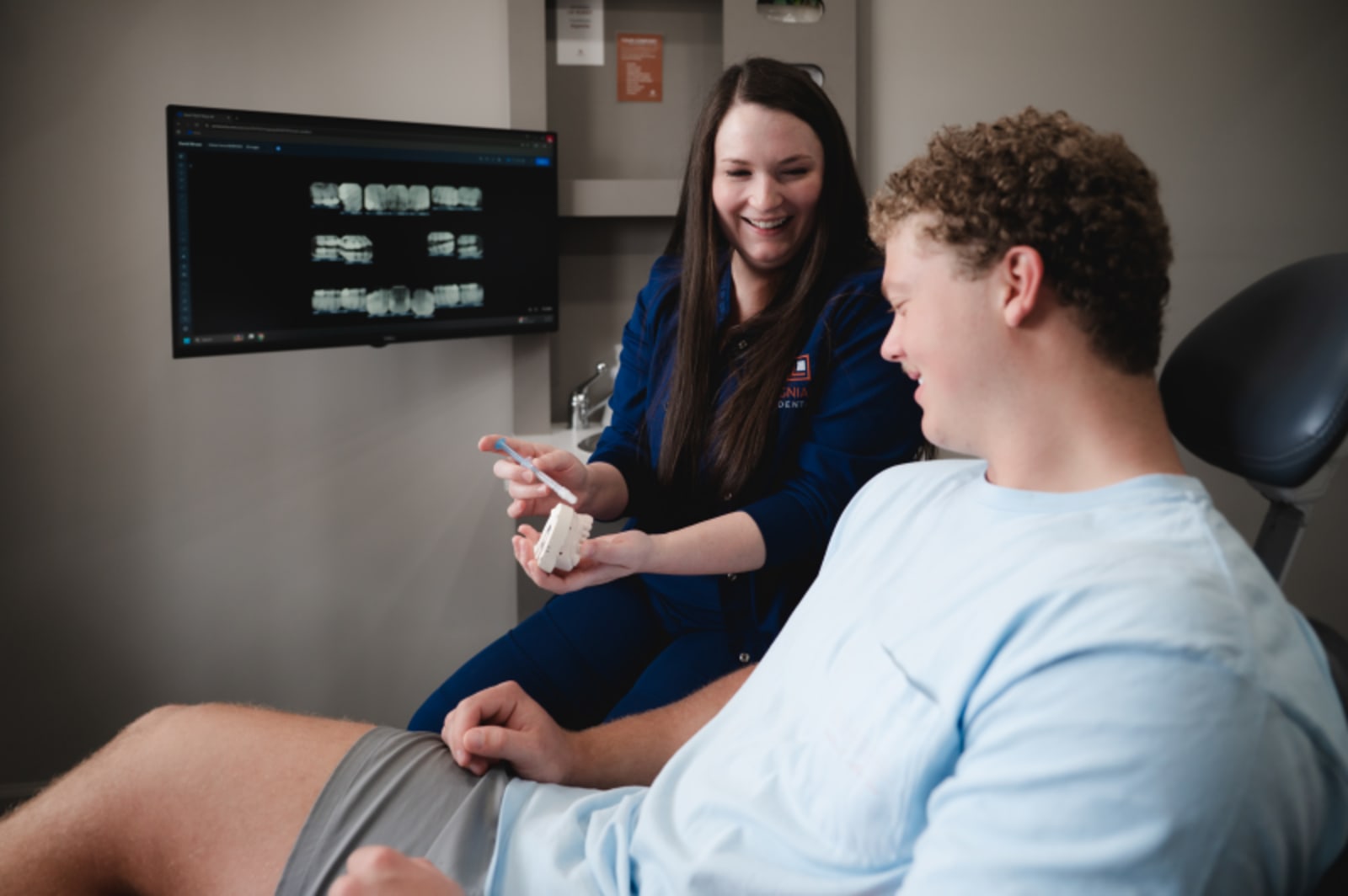
A 3D scan gives us a detailed look at your bone, sinuses, and nerves. This is where the plan takes shape: where the post goes, at what angle, and whether anything needs to happen first.
2. Any Groundwork, If It's Needed
If the tooth has been gone a while, the bone at that site may have thinned. A bone graft holds space so your own bone can grow in and around it, giving the implant something solid to sit in. Not everyone needs this. When you do, it adds a healing stage before placement.
3. Placing the Implant
The post is placed into the jawbone at a single appointment, and the area is numbed thoroughly first. Most people describe the sensation as pressure rather than pain.
4. Healing and Integration
Over the next several months, your bone grows around the post. That bonding process, called osseointegration, is what makes an implant stable enough to bite down on for decades. You'll check in with us along the way so we can confirm everything is healing as it should.
5. The Crown Goes On
Once the post is solid, we attach a small connector piece and the custom crown, shaped and shaded to match the teeth beside it. That's the visit where it stops being a project and starts being a tooth.
What an Implant Actually Gives You Back
- You eat normally again. Implants handle chewing pressure the way a natural root does, so apples, corn, and a good ribeye are back on the table.
- Nothing shifts or clicks. There's no adhesive, no plate covering your palate, and no rehearsing a sentence before you say it out loud.
- Your jawbone keeps its job. Bone that isn't being used gradually shrinks, and an implant post keeps the bone active at that site, which helps preserve the shape of your face over time.
- An implant leaves your other teeth alone. A traditional bridge requires grinding down the healthy teeth on either side of the gap just to anchor it in place.
- It's built to last. With good home care and regular checkups, implant posts often last decades.
To talk through whether an implant fits your situation, Dr. Bruce and our team in Fairhope will walk you through your options and what each one costs before anything gets scheduled.
Who Implants Work Best For
Most healthy adults. We're looking for healthy gums, enough bone at the site to hold the post, and any ongoing health conditions (diabetes being the most common) kept under reasonable control. Growth needs to be complete, so implants are for adults rather than teenagers.
A few situations call for more conversation. Smoking slows healing and raises the risk of the implant failing, but it doesn't rule you out. Untreated gum disease needs to be resolved before an implant goes near that area. If bone loss is significant, grafting may come first, or a different route may make more sense for you. Bone loss after tooth loss is common and often fixable, so a site that looks unusable at first frequently isn't. We'll walk through what applies to your situation at your consultation.
Timeline: What to Expect, Visit by Visit
The five stages above translate to roughly three to six months of calendar time for a single implant, and only a handful of hours in the chair. If grafting is part of your plan, add several months before the post goes in.
- Total appointments: five or six, most of them short. The consultation runs under an hour, and the crown scan and delivery are shorter still.
- Surgical visits: one for placement, plus one for grafting if you need it.
- Recovery from placement: most people are back to desk work the next day.
- Healing time: the bulk of the timeline, with brief check-ins along the way.
Rushing the healing process undermines the foundation your crown will depend on for years, so we don't shortcut it.
Prep Steps and Aftercare, Kept Simple
Before your placement appointment, bring a current list of medications and supplements, including blood thinners, and let us know about any heart conditions or recent surgeries. Eat something beforehand unless we've told you otherwise. If you smoke, cutting back in the weeks around surgery makes a real difference for healing.
Afterward, some swelling and tenderness for a few days is completely normal. Use ice on and off the first day, and stick to soft foods for the first week or two while things settle. Keep the area clean but be gentle about it. Rinse as directed, brush the rest of your mouth as usual, and hold off on straws and vigorous spitting while the site heals.
Once the crown is in, treat it like any other tooth. Brush twice a day, floss around it, keep up with cleanings, and wear a nightguard if you tend to grind. Implants themselves cannot get cavities, but the gum and bone around them can become irritated over time, and that is the main thing that puts an implant at risk. Routine checkups are the best way to catch any early signs before they become a real problem.
Honest Talk About Implant Pricing
Implant cost depends on your specific situation, and any number quoted before someone has actually looked at your scans is just a guess. Here is what shapes the final price:
- Whether bone grafting or other prep work is needed before placement
- How many implants are being placed
- What gets attached on top, whether that is a single crown, a bridge, or a full-arch restoration
- Whether a tooth still needs to be removed first
Dental insurance for implants can be tricky. Some plans cover parts of the process while skipping others. We will go over exactly what your plan covers before anything gets scheduled. At your consultation, we walk through payment options alongside your treatment plan and give you a full itemized breakdown of the whole case, with no numbers that quietly grow after the fact.
Why Fairhope Patients Choose Us for Implants

Dr. David Bruce places the implant and makes the final crown, all in our Fairhope office. That means your surgical plan and your restoration come from the same person, using the same 3D imaging from start to finish.
- LECOM School of Dental Medicine graduate with hands-on implant experience
- Placement and crown done in one office, no referrals, no handoffs
- 3D imaging and digital scans guide every step of your plan
- Clear, honest breakdown of your options and costs before anything is scheduled
- Local to Fairhope, Dr. Bruce lives here with his wife and four kids
We walk you through your options, explain the trade-offs honestly, and let you decide. Nobody here is going to push you toward the biggest treatment plan. You get treated the way we would want our own family treated.
FAQs About Dental Implants
Does Getting a Dental Implant Hurt?
The area is numbed thoroughly, so the placement itself feels more like pressure than pain. Some soreness for a few days afterward is normal and manageable with over-the-counter pain relief. Most people tell us it was easier than the tooth removal that came before it.
How Long Do Dental Implants Last?
The post itself can last decades, often a lifetime, when the gum and bone around it stay healthy. The crown is a replacement part and may need refreshing at some point. Gum inflammation around the implant is the main risk to watch for, and it's usually noticeable at a routine visit before it becomes a real problem.
I Was Told I Don't Have Enough Bone. Now What?
Whether an implant is workable depends on how much bone is left and where. We check that with cone beam imaging before recommending anything. Dr. Bruce will walk you through what the scan shows before any treatment gets scheduled.
Can I Have an Implant if I Smoke?
You can. Smoking doesn't disqualify you. The weeks just before placement and the first several weeks after are when it matters most, while your bone is bonding to the post. Cutting back during that window does more for the outcome than anything else you can control.
Will Anyone Be Able to Tell It's an Implant?
Not typically. The crown is shaped and color-matched to the teeth around it, and because the post sits in bone, it doesn't move or sound different when you eat.
Come Talk to Us About It
Deciding on an implant is a big call, and it's completely normal to have questions before you commit. At your consultation, we'll look at your imaging, walk through what your situation allows, lay out your alternatives, and give you a clear picture of timing and cost. If you don't have dental insurance, ask about our dental savings plans. You can also read what other Fairhope patients have said on our patient reviews page before you call.
We're at 106 Lottie Lane in Fairhope, open Monday through Thursday, 8:00 a.m. to 5:00 p.m. Call (251) 517-3313 when you're ready, and we'll take it from there.
WE CAN’T WAIT TO MEET YOU
Call 251-517-3313 or request an appointment online to set up your first visit. We’ll be in touch soon.