
Root Canal vs Filling: Which Does Your Tooth Actually Need
That Toothache Is Telling You Something. But What?
You probably know the feeling. It's midnight, your jaw is throbbing, and you're three pages deep into a search that has you half-convinced you need a root canal, a crown, possibly surgery, and a long talk with someone you trust. Or maybe you're sitting in the waiting room, running through worst-case scenarios, bracing yourself for news you're not sure you're ready to hear. The not-knowing may feel worse than what you're actually facing.
Here's the honest answer: the difference between a filling and a root canal comes down to how far the damage has traveled. Decay or a crack that stays within the outer layers of the tooth, the enamel and dentin, can usually be resolved with a filling. Once that damage reaches the pulp, the soft inner chamber that holds the nerve and blood vessels, a root canal becomes necessary to clear the infection and save the tooth.
That's it. That's the core of it. Everything else, the symptoms, the timing, the treatment plan, builds out from that one distinction. And knowing it means you can walk into your appointment at Lagniappe Dental with a clearer head, ready to understand what you're actually dealing with instead of dreading something that may not even apply to you.
Quick Takeaways:
- Shallow damage = filling (quick, affordable fix)
- Deep damage reaching the nerve = root canal needed
- Your symptoms will give you clues about which you're facing
- Early treatment means more options and lower costs
What a Filling Actually Fixes (and What It Can't)
A filling is one of dentistry's most straightforward tools, and it works remarkably well within its intended range. When decay removes structure from a tooth, or a chip takes out a piece of enamel, or years of grinding wear a surface down, a filling steps in to rebuild what's gone. The material bonds to the remaining tooth, restores the shape, and lets you chew and function normally again.
The reason it works so cleanly in those situations comes down to one thing: the nerve is still out of the picture. The pulp, which is the soft inner tissue at the center of your tooth, hasn't been touched. Decay stayed in the outer layers. The tooth is structurally compromised but biologically fine. A filling closes the gap, seals out bacteria, and the tooth carries on.
But decay doesn't always stay polite. When it works its way deeper, toward or into the pulp, the math changes entirely. At that point, placing a filling over the problem doesn't fix it. It covers it. The infection or irritation continues underneath, and the tooth keeps signaling distress, sometimes loudly, sometimes quietly for months. In Dr. Bruce's experience, this is often where patients come in wondering why their tooth still hurts after putting off treatment. That's the line where a filling stops being the right answer, and understanding where that line is will make the rest of this conversation a lot more useful.
When the Problem Has Gone Deeper Than a Filling Can Reach
That line exists because of what's inside a tooth. Beneath the hard outer enamel and the softer dentin layer underneath it, there's a chamber filled with living tissue: nerves, blood vessels, and connective tissue collectively called the pulp. When decay is caught early, a filling handles it cleanly. But when bacteria work their way through those outer layers and reach the pulp, the situation changes in a fundamental way. The tooth can't fight that infection on its own. The nerve chamber becomes inflamed, pressure builds, and that's often when pain becomes difficult to ignore.
A root canal addresses exactly that. The procedure removes the infected pulp tissue, cleans and shapes the canal inside the root, and seals it so bacteria can't get back in. The tooth stays in place, continues to function, and the source of the infection is gone. That's it. It's not a dramatic intervention so much as a precise one.
The fear around root canals is understandable, but it's mostly misplaced. The procedure doesn't cause pain. It ends the pain that was already there. Dr. Bruce has found that many Fairhope patients report the days leading up to the procedure were far worse than the appointment itself. What you're feeling before a root canal is an infected nerve under pressure. What happens during the procedure is that the pressure gets relieved.
If you've been putting off a visit because you're worried about what the dentist might find, that delay is often what turns a manageable problem into a bigger one. Dr. Bruce and the team at Lagniappe Dental take time to make sure you understand what's happening and why before anything begins. You can also call directly at (251) 517-3313 if you'd rather talk it through first.
The Symptoms That Point One Way or the Other
Your body may give you clues before a dentist ever picks up an instrument. The trick is knowing which clues mean what, and being honest about the fact that clues aren't a diagnosis.
Signs that typically point to filling-level treatment:
- Mild sensitivity to sweets or cold that fades within seconds
- Small dark spots visible on the tooth
- Slightly rough texture when you run your tongue across it
These suggest decay has reached the enamel or just into the dentin, but the nerve is still healthy.
Root canal territory often feels different in a way that's hard to ignore:
- Sensitivity to hot or cold that lingers well after the stimulus is removed
- Spontaneous, throbbing ache without obvious cause
- Swelling near the gumline
- Pain when biting down
- Tooth that's started to look darker
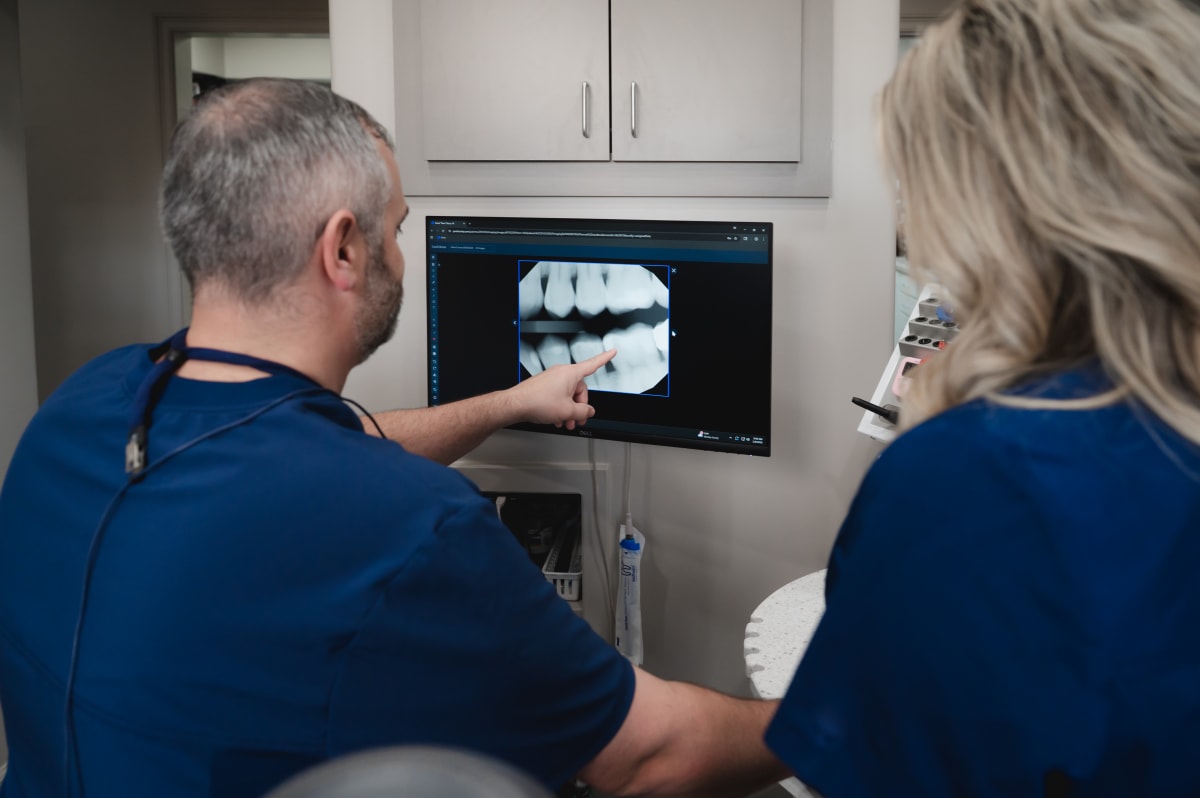
Symptoms alone can't confirm what's happening inside the tooth. Dr. Bruce uses digital radiography and clinical tests to know for certain what's going on. So if you're reading this list and feeling uncertain, that uncertainty is actually a good reason to come in. You can also explore our full range of dental services to get a sense of what care at Lagniappe looks like, or reach out directly at (251) 517-3313. Getting the right answer is always better than guessing.
Why Waiting Usually Turns a Filling Into a Root Canal
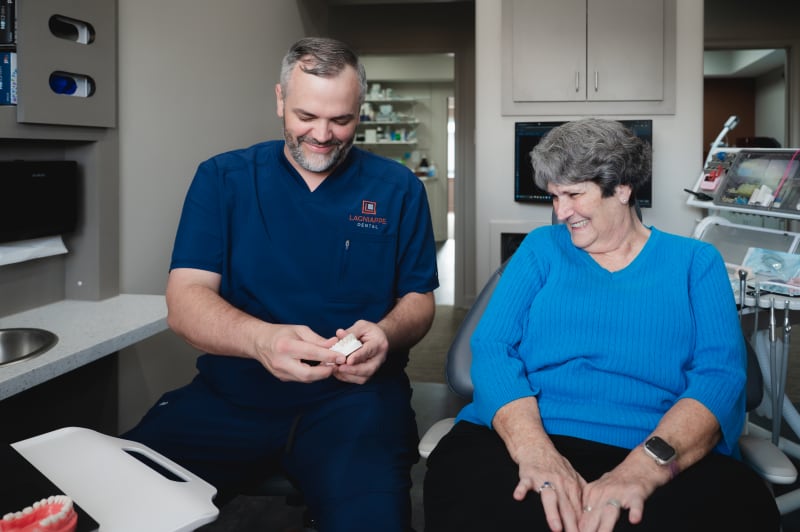
Getting the right answer is always better than guessing, and nowhere is that truer than with a cavity you've been putting off.
Many people avoid the dentist not because they don't care about their teeth, but because life gets busy, because they're hoping the sensitivity goes away on its own, or because they're not sure it's worth the cost right now. That thinking is understandable. It's also how a simple filling can become a much bigger problem.
Here's how the progression typically works: a small cavity starts in the outer layer of the tooth. At that stage, treating it is quick, affordable, and straightforward. But decay doesn't stay put. Left alone, it moves deeper through the tooth structure until it reaches the pulp, which is the living tissue at the center. Once bacteria get there, infection follows. Now you're not looking at a filling anymore. You're looking at a root canal, and possibly a crown on top of that.
If you're curious about what that process actually involves, this breakdown of root canal therapy explains what to expect and why it's often less intimidating than people assume. But honestly, many people would prefer to skip it entirely, and catching decay early is often how you do that.
Early treatment costs less, takes less time, and keeps more of your natural tooth intact. That's not a scare tactic. It's just how teeth work. The sooner you come in, the more options you have.
What Your Dentist Is Actually Looking For at That Appointment
Coming in sooner gives you more options, but understanding what happens during that appointment can make the whole experience feel a lot less like a guessing game. Many people sit in the chair and wait for a verdict without knowing what evidence is actually being gathered. That's worth changing.
- A thorough exam pulls from several different sources of information.
- Digital X-rays show what's invisible to the naked eye: how deep the decay has traveled and whether the bone surrounding the tooth root looks healthy.
- A visual inspection, often enhanced with an intraoral camera, catches cracks, discoloration, and surface breakdown.
- Percussion testing, where the dentist gently taps the tooth, checks for inflammation around the root.
- Thermal testing, using a cold or heat stimulus, tells the dentist how the nerve is responding. A tooth that reacts sharply and then settles down is behaving differently than one that lingers in pain, and that difference matters.
This process follows established protocols. Dr. Bruce's approach at Lagniappe Dental is built on clinical evidence and clear communication, not a gut feeling. When a filling is recommended over a root canal, or the other way around, it's because the data from those tests points in a specific direction. You deserve to understand that process, and knowing it exists can help you feel more confident about what comes next.
Not Sure What Your Tooth Needs? That's What We're Here For.

Tooth pain is stressful on its own. Not knowing whether you're looking at a filling, a crown, an implant, or something else entirely makes it harder. That uncertainty can keep people from calling at all, and that's the part we want to change.
At Lagniappe Dental, our goal is to give you a straight answer. Dr. Bruce uses digital imaging and his clinical experience to look at what's actually going on, then walks you through your options clearly—whether that's a straightforward restoration or a bigger decision like weighing single tooth implants vs. dental bridges. No guesswork, no pressure to decide on the spot.
If you've been sitting with this question, come in and get the clarity you need. We're here in Fairhope at 106 Lottie Lane, open Monday through Thursday. Give us a call at (251) 517-3313 whenever you're ready.
WE CAN’T WAIT TO MEET YOU
Call 251-517-3313 or request an appointment online to set up your first visit. We’ll be in touch soon.