
Dental Implant Costs With No Insurance: What You Really Pay
What You'll Actually Pay for Dental Implants Without Insurance
Most people searching for implant costs have already noticed something frustrating: the number on a practice's website and the number on the treatment plan don't always match. That gap exists because implant pricing is genuinely layered. The implant post, the abutment, the crown, any bone grafting needed beforehand, sedation, advanced imaging. Each piece carries its own cost, and not every quote includes all of them upfront. So before you start comparing numbers, it helps to understand what you're actually comparing.
This page exists to give you a clear picture of implant costs without the runaround. If you don't have dental insurance, that doesn't mean you're out of options. It means you need better information. That's what we're here for. And if cost is a real concern, it's worth looking at Lagniappe's dental savings plan, which can meaningfully reduce what you pay even without traditional coverage.
Quick Takeaways
- Always ask for an all-inclusive quote that covers the implant post, abutment, crown, and any necessary preparatory work like bone grafting or extractions
- Budget $3,000-$6,000 for a single implant when planning, but know that your actual cost depends on your specific case and what's included
- Get quotes from multiple providers and compare what's actually included in each estimate, not just the bottom-line number
- Ask about financing options upfront — many practices offer payment plans, in-house savings programs, or work with third-party financing to make treatment affordable
Why Implant Prices Vary So Much From Office to Office
Sticker shock is real in the implant world. Patients routinely see quotes ranging from $1,500 to $6,000 or more for a single implant, sometimes from offices just miles apart. The frustration is understandable. Online forums are full of people saying things like "these are outrageous prices" and feeling misled by low advertised numbers that balloon once they're actually in the chair. That gap isn't random, though. A few specific factors drive most of it.
The implant itself is one of them. Not all titanium posts are created equal. Name-brand implant systems from manufacturers like Nobel Biocare or Straumann carry higher material costs but come with decades of clinical research behind them. Generic or off-brand components cost less upfront, but the long-term data is thinner. You won't always know which you're getting from an advertised price.
The surgeon's experience and credentials are another major variable. Placing implants well takes real skill, and providers who have spent years doing high volumes of implant cases typically charge more because they've earned it. Dr. Bruce's LECOM training and years of implant experience mean you're working with someone who's refined their technique through hundreds of cases.
Geography plays a role too. Overhead in Mobile or Birmingham is different from overhead in Fairhope, which is part of why our pricing tends to be more straightforward than what patients find in larger markets.
Finally, some offices refer implant cases out to an outside oral surgeon or periodontist. That adds a second provider fee to your total. When placement and restoration happen under one roof, the pricing structure is simpler and coordination is tighter.
Breaking Down the Full Cost: What's Actually Included (And What Isn't)
Understanding what goes into the price of a dental implant matters more than most people realize before they start getting quotes. A number that looks straightforward on a website or in an ad often tells only part of the story, and knowing what to look for protects you from surprises down the road.
A complete implant restoration typically involves several distinct components, and each one carries its own cost. Here's what a full treatment plan generally includes:
- The implant post itself, the titanium fixture that gets placed into the jawbone and acts as the tooth root
- The abutment, the connector piece that sits on top of the post and holds the crown in place
- The crown, the visible tooth-shaped restoration that most people think of as "the implant"
- Bone grafting, if needed to rebuild jawbone before placement
- Tooth extraction, if the damaged tooth is still present and needs to come out first
- Advanced imaging, which gives your care team a precise three-dimensional picture of your bone structure
- Digital impressions, which create precise measurements without uncomfortable traditional molds
- Consultations and follow-up visits, which are part of doing this well and safely
Here's where the confusion tends to start: many advertised implant prices, especially the low numbers you see in promotions, cover only the implant post. The abutment and crown are separate. Bone grafting, if needed, is separate. Advanced imaging is often separate. By the time you add everything together, the final cost can be significantly higher than what first caught your attention.
Before you move forward with any provider, ask for an all-inclusive treatment plan quote in writing. A trustworthy practice will give you a complete picture of what's involved based on your specific situation, not a starting number designed to get you in the door. For a closer look at how these components work together in your treatment, our article on single tooth implants vs. dental bridges walks through the details worth knowing before you commit.
When You Might Need Bone Grafting (And What That Adds to the Bill)
Bone grafting is one of the biggest cost surprises patients encounter, and it's worth understanding before you're in the consultation chair.
Here's the basic situation: implants need solid bone to anchor into. When a tooth has been missing for a while, or was extracted after infection or trauma, the jawbone in that spot starts to shrink. It's a natural process, but it means there may not be enough bone density or volume to support an implant without some preparation first. A thin or shallow jaw ridge is the other common reason grafting comes up, even in patients who haven't had a recent extraction.
Not everyone needs it. Patients who move forward with an implant shortly after extraction often have enough bone remaining. But if there's been a gap of months or years, or if the original tooth was lost due to gum disease, the odds of needing a graft go up significantly.
In terms of cost, bone grafting typically adds somewhere between $500 and $3,000 or more to the total, depending on the size of the graft and the material used. It also adds time. A graft usually needs several months to integrate before the implant post can be placed, which can stretch the overall timeline from a few months to closer to a year.
The key is identifying grafting needs during your initial evaluation rather than discovering them mid-treatment. At Lagniappe Dental, Dr. Bruce's thorough assessment process means any grafting requirements are discussed upfront as part of your complete treatment plan.
If you're in the Fairhope area and want to know whether grafting would be part of your treatment before committing to anything, you're welcome to call us at (251) 517-3313 or reach out online to schedule a conversation.
Single Implant vs. Multiple Implants vs. Full-Mouth: How Costs Scale
One of the most common questions people bring to their first implant consultation with Dr. Bruce is simple: "How much is this actually going to cost me?" The honest answer depends almost entirely on how many teeth you're replacing and which approach makes sense for your situation.
A single tooth implant is the most straightforward case. You're missing one tooth, the bone around it is healthy, and the solution is one implant post plus one crown. Costs for a single implant typically fall somewhere in the $3,000 to $5,000 range when you factor in the post, the abutment, and the crown together. If you're weighing this option against a traditional bridge, our article on single tooth implants vs. dental bridges breaks down how those two approaches compare over time.
When you're replacing two or three adjacent teeth, an implant-supported bridge becomes an option worth considering. Instead of placing one implant per missing tooth, two implants anchor a bridge that spans the gap. That shared structure is where the per-tooth cost starts to drop. You're getting more coverage without a proportional jump in price.
Full-arch replacement is where the economics shift most significantly. Implant-supported dentures use strategically placed implants to support an entire arch of teeth. The total investment is higher than a single implant, but the cost per tooth is considerably lower because so many components are shared.
Here's a rough way to think about the tiers:
- Single tooth replacement: one implant, one crown, most predictable cost
- Implant-supported bridge (2 to 3 teeth): two implants, shared crown structure, moderate cost
- Implant-retained denture: four to six implants anchor a removable or fixed denture, higher total but lower per-tooth
- Full-arch implant-supported dentures: complete arch restoration, highest investment, lowest cost per tooth
If you're a senior weighing whether a single implant makes sense at this stage of life, our article on single tooth implants for seniors addresses that question directly. And if you're not sure which tier fits your situation, Dr. Bruce can walk you through your options during a consultation at our Fairhope office. You can reach us at (251) 517-3313.
No Insurance? Here's How People Actually Make Implants Affordable

Implants are a significant investment, and it's completely reasonable to take some time to plan for them. Most people without dental insurance aren't looking for a workaround. They just want to know their real options.
At Lagniappe Dental, we offer an in-house membership plan that gives uninsured patients access to discounted treatment rates, including implant work. Dr. Bruce designed this program specifically for Fairhope families who want quality care without the insurance hassle.
If you have a Flexible Spending Account or Health Savings Account, implants are an eligible expense. That means you're paying with pre-tax dollars, which quietly reduces your effective cost without any extra steps beyond using the card.
Sometimes patient consider getting help at a Dental School since treatment costs could potentially be significantly lower, but appointments run longer and scheduling is less flexible. For some people it's a great fit. For others, the convenience and personalized care of a local Fairhope practice is worth the difference.
Phased treatment is another practical option Dr. Bruce offers. Rather than completing everything at once, we can sequence your treatment across multiple visits and billing cycles. It keeps the process moving without requiring the full cost upfront.
The Real Cost of Waiting: Why Delaying an Implant Often Costs More
Putting off a dental implant is one of the most common decisions patients make, and it's completely understandable. The upfront cost feels significant, and it's easy to tell yourself you'll handle it later. But "later" has a way of getting more complicated and more expensive.
When a tooth is lost, the jawbone underneath it no longer receives the stimulation it needs to stay dense. That bone starts to shrink fairly quickly — within the first year, you can lose meaningful bone volume. The longer the gap sits empty, the more bone disappears.
Why does that matter for cost? If too much bone has been lost by the time you're ready to move forward, a bone graft becomes necessary before placement can happen. That's additional procedure time, healing time, and expense that could have been avoided with earlier action.
There's also the issue of neighboring teeth drifting toward the open space over time, which can affect your bite and how straightforward future treatment will be.
How Lagniappe Dental Approaches Implant Treatment and Pricing
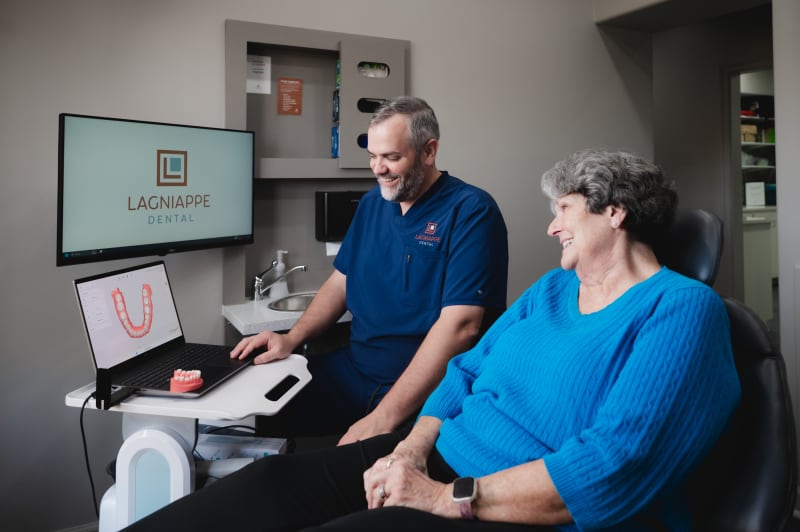
At Lagniappe Dental, when you come in for an implant consultation, you leave with a written treatment plan and a real number, not a starting point. Dr. Bruce's approach is straightforward: comprehensive imaging during your visit means he can see exactly what's involved before quoting anything. No guessing. No "we'll know more once we get in there."
We handle implant placement and restoration in-house, which keeps your care coordinated and your timeline predictable. You're not bouncing between offices or waiting on referrals to move forward. That continuity matters, especially for a multi-stage process like implants.
That's part of why Dr. Bruce chose to practice in Fairhope: to offer quality care without the overhead pressures of larger markets. We'd rather help you find a path forward than have cost be the reason you wait another year.
If you want to hear directly from people who've been through this process with us, our patient stories page is a good place to start.
When you're ready to get a real answer about your specific situation, give us a call us at (251) 517-3313 or stop by 106 Lottie Lane in Fairhope.
A conversation with Dr. Bruce costs you nothing, and you'll walk out knowing exactly what you're looking at.
WE CAN’T WAIT TO MEET YOU
Call 251-517-3313 or request an appointment online to set up your first visit. We’ll be in touch soon.